Pitcher Artificial Intelligence
Build the pitcher
they’re afraid to face.
The development process that builds professional arms, scaled to a pitcher with a phone and one season. It develops velocity, sharpens movement, opens up range of motion, and helps protect the arm while all of it happens.

The five types
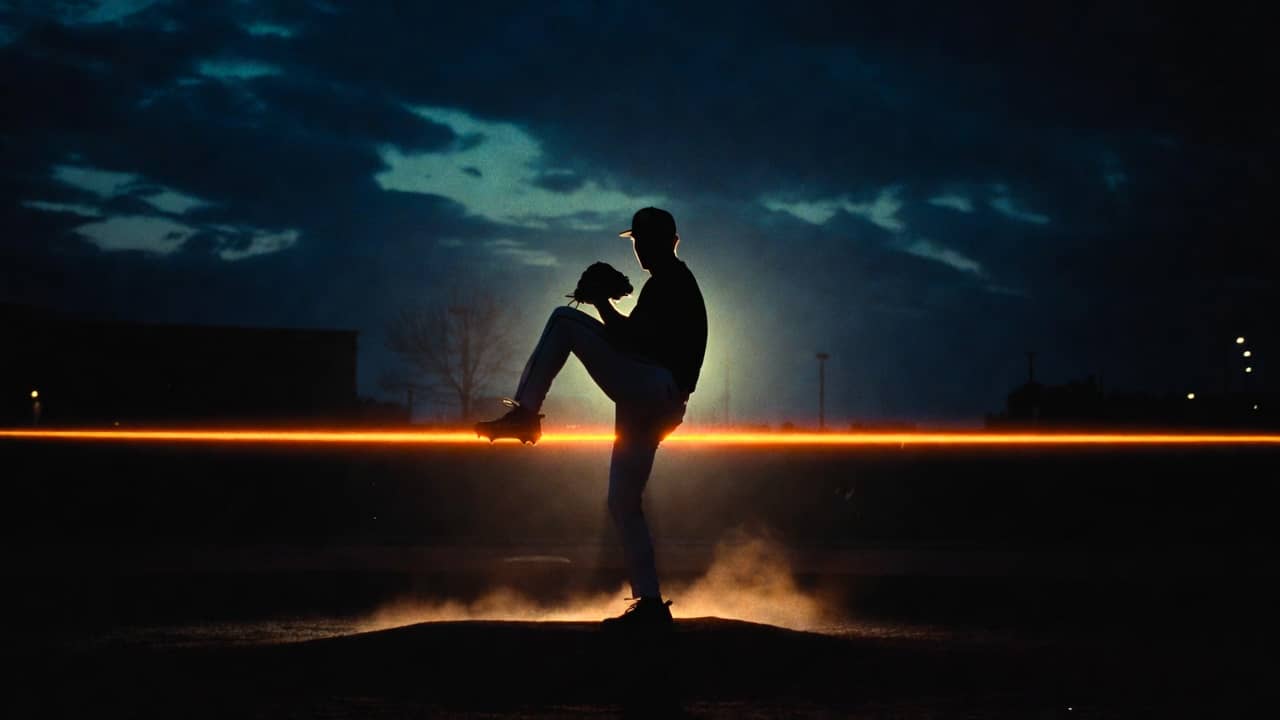
Your pitcher already has a weapon.
Most never find out what it is. Training a Power arm like a Spin Doctor wastes both, and a wasted season does not come back. So the platform works out which one they are first. Every throw after that builds that pitcher.
You win with force.
The fastball is the plan, and it is a good plan. Hitters are late, and everything else you throw is better because they have to respect it. The work is not finding more stuff. It is holding what you already have from the first inning to the last.
Major-league illustrations
Paul Skenes
Elite velocity that holds deep into starts.
Hunter Greene
Top-of-the-scale fastball as the primary weapon.
Jacob deGrom
Velocity paired with command. The rarest version of it.
Public pitch shapes, used to illustrate a type. Not a projection and not a ceiling.


Assess
Find the weapon before you train the arm.
Before a single throw is prescribed, the platform establishes the pitcher’s type, their throwing history, and their stage of physical development. "14U advanced" is not an assessment. This is. Everything downstream is only as good as it.
- Pitcher type across five archetypes, with the split, not just the winner
- Development stage: pre-puberty, growth spurt, or post-puberty
- Throwing history and current workload, from real logged sessions
Design
Build toward the pitcher they could become.
Throwing, mobility, and nutrition are generated together, against the assessment and against the calendar the pitcher actually lives in: school ball, travel ball, showcases, and the off-season between them. One plan, pointed at one outcome, instead of three plans pulling against each other.
- Throwing progressions weighted to the pitcher’s type
- Mobility that protects range of motion through the growth spurt
- Nutrition built for a growing athlete, not adult diet culture
Develop
Keep the progress coming. Help protect the arm.
The program reads the workload that actually happened, not the workload that was planned. Volume moves up when the pitcher has earned it, and backs off before a spike becomes the thing that ends their season.
- Acute-to-chronic workload ratio, recomputed as sessions are logged
- Weekly adjustment to volume and intensity, with the reason stated
- Guardrails that manage workload, never a promise to prevent injury
What progress looks like
See exactly what is getting better.
TrackMan, Rapsodo, and public Statcast data come in; movement profiles, percentile rankings, and a workload ratio come out. Progress stops being a feeling at the end of a season and starts being a number you can watch move. This is the product, not a picture of it. Every figure below is sample data, but the rendering is the real thing.
Pitch movement
Sample dataEvery pitch in the arsenal, plotted by break. Marker size is velocity.
- Four-seam+7.5" HB+16.5" IVB93.4 mph
- Sinker+15.2" HB+6.8" IVB91.8 mph
- Changeup+14.1" HB+4.2" IVB84.6 mph
- Slider-6.4" HB+1.1" IVB84.9 mph
- Curveball-9.8" HB-11.4" IVB78.2 mph
Pitcher profile
Sample dataRanked against the platform’s own amateur cohort, not against major-league averages, which would tell a fifteen-year-old nothing useful.
- Fastball velocity93.4 mph · 88th
- Induced vertical break16.5 in · 74th
- Extension6.4 ft · 91th
- Spin efficiency96% · 67th
- Strike rate64% · 52th
Workload
Sample dataAcute load against chronic load, recomputed as sessions are logged.
1.12ACWR
Sweet spot
121 acute against 108 chronic, over 34 logged days. The program manages load toward this band. It does not promise to prevent injury.
On the phone in your pocket
Never guess what this week should be again.
It is an app, not a PDF, and the program lives where the pitcher lives. Log a bullpen from the car, see the week adjust before you get home, and let a parent or coach see the same thing you do.
Good morning.
You are on day 12 of a four-week Acceleration block.
ACWR
1.12
Sweet spot
Throws, 7d
238
Target 210–260
Sessions
5 / 6
One left
Profile
- Fastball velocity88th
- Induced vertical break74th
- Extension91th
Dashboard. Interface preview, sample data.
Week 2 · Acceleration
Your throwing week
- MonRecovery catch35
- TueLong toss60
- WedMobility only–
- ThuBullpen, command45
- FriRecovery catch30
- SatGame68
- SunOff–
Thursday moved from 60 throws to 45 after Saturday’s outing ran long. The program adjusts; you do not have to do the arithmetic.
This week’s program. Interface preview, sample data.
1.12ACWR
The workload ratio is on every screen, every day, for every athlete on the account. It is the number that decides whether this week goes up or comes down.

What’s at stake
Roster spots. Wins. Showcase looks.
Scholarships.
They go to the pitcher who developed, not the one who waited.
The other pitcher
Somewhere there is an arm the same age putting in the winter with a plan behind it. Come March, one of them gets the ball in the game that matters.
The window
Range of motion, movement patterns and throwing mechanics are at their most trainable while an athlete is still growing. That window opens and closes on its own schedule, not on yours.
The season
A season thrown without a plan is not a neutral season. It is a full year of load on the arm with nothing built on top of it.
The founding cohort is capped at 1,000 households. Those places join for $259 and hold $79 / year in dues for as long as the membership stays active. Everyone after them joins the PAINT Membership at $399 and $99 / year. Both close when the cohort fills. The season does not wait for either.
Find your pitcher type, free
Where the process comes from
The process built by a World Series
pitching architect.
Brian Bannister built and ran pitching development inside three major-league front offices. PA.I.NT is that same loop, assess, design, develop, rebuilt for a pitcher with no front office behind them. There are no youth testimonials here. There are none yet that would be honest.
The full record →1
World Series won by a club whose pitching development he built (Boston, 2018)
3
Major-league front offices the process was built inside (Boston, San Francisco, Chicago)
25M
Subscriber reach of the Mark Rober collaboration on pitching physics
That work was documented in The MVP Machine, the New York Times bestseller on how player development was rebuilt around data.
Start now, or start a season behind.
The off-season is where velocity, movement and range of motion get built, and it is running whether there is a plan behind it or not. One initiation to join your household, then annual dues that fund the season ahead. Founding members hold both rates for as long as the membership stays active, including through every increase after the first 1,000 places are gone.
259initiation$259 founding initiation, paid once
Then $79 / year in dues, locked for life. Lower under 13.
PAINT Membership is $399 to join and $99 / year. Founding is $140 off to join, and cheaper dues for life: $20 less every year, forever.
- AI throwing programs that adapt every week to logged workload
- Mobility and nutrition built for a growing athlete, in the same plan
- Pitch-movement profiles from TrackMan, Rapsodo, and public Statcast data
- Workload monitoring on every screen, for every athlete on the membership
- Parent and coach dashboards, with the athlete’s data kept to the household
- One initiation per household. A second pitcher pays dues and nothing more


Meet Throwie
Nobody asks about the logo.
Everybody asks about him.
He has never shaken off a sign, he has never once been on time, and he has been throwing the same two-seamer at the same brick wall for years without getting bored of it. He is the friendliest thing on this platform and he is holding the ball you are about to hit.
He is a spray can
PA.I.NT is what a pitcher does to the corners of the zone, so the mascot is the can that does it. The glove was his idea.
He turns up on the quiet days
Empty screens, first sessions, the milestone nobody else noticed, and the page you land on when a link breaks. That is his whole beat.
He stays out of the way
He does not coach, he does not keep score, and he never says a word about your arm. There are screens he is not allowed on, and that is written into the code rather than left to taste.



One character, however you catch him. That is the whole cast.
The drop board
Achievements earn drops.
Stickers, patches and tees, tied to things a pitcher has actually done in the app rather than to a checkout. The plan is that the streak you are already holding is the thing that puts a mark on your bat bag.
Throwie, in colour
Finish your first week of a program.
Throwie, pitching
Hold a logging streak through a full training block.
Throwie, swinging
Unlock your pitcher type and put it on something.
The store is not open and nothing here is for sale. Membership never needs it. Throwie is holding the box.